Launch offer — valid today only

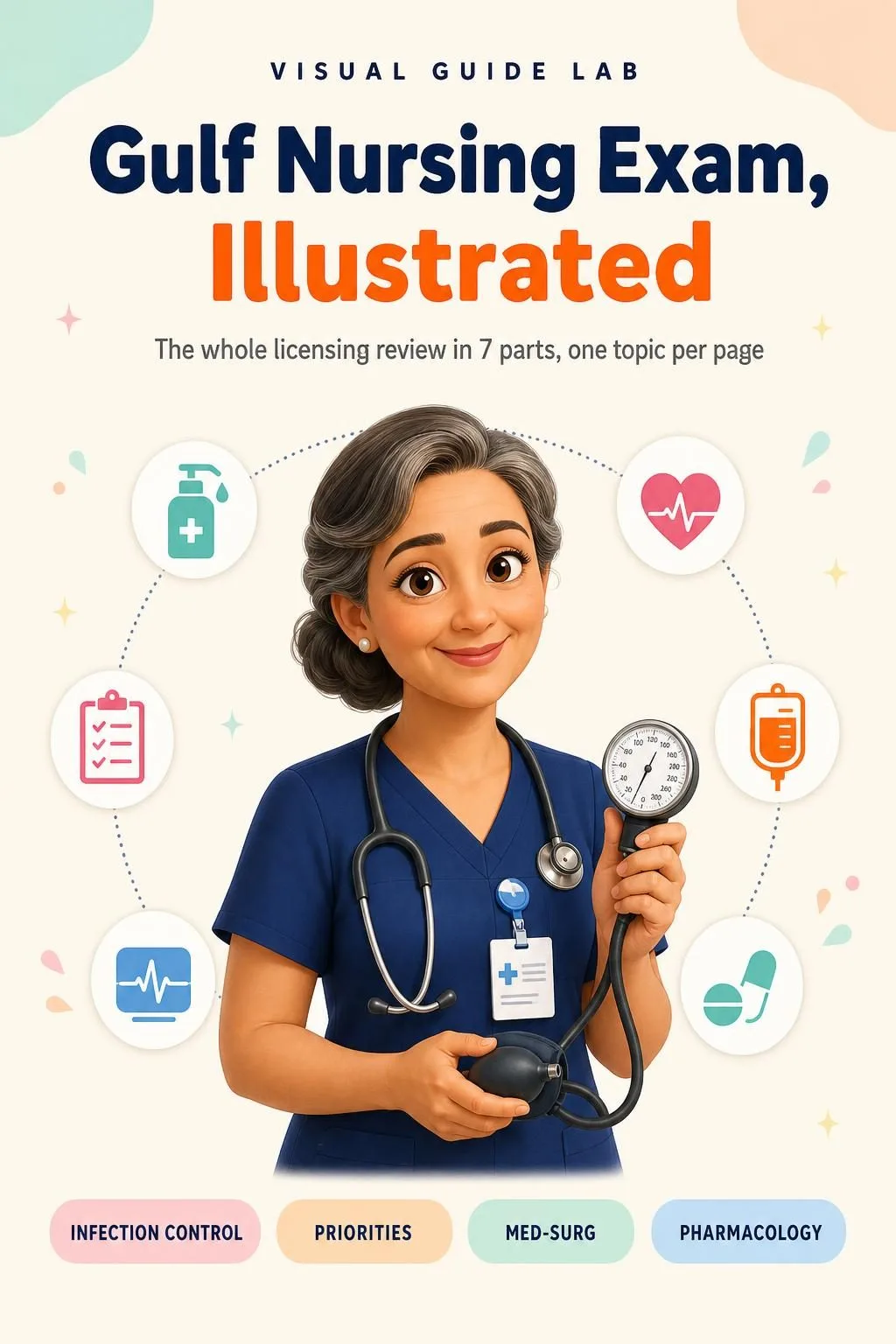
Your Gulf Nursing Licensing Exam Review, One Topic per Page With Every Concept Drawn Step by Step!

For DHA, DOH, MOH, SCFHS and QCHP candidates. Priorities, Glasgow, blood gases, drip rates, APGAR and BLS: in your notes it's a wall of text. Here each topic fits on one page, with the drawing and what you need to remember. 67 illustrated pages.

YES, I WANT THE ILLUSTRATED REVIEW

🔒 Secure checkout · PDF by email · 30-day guarantee

One topic per pageone topic per page, drawn
67 illustrated pages7 parts, from infection control to exam practice
Up-to-date sourcesWHO, CDC and AHA guidelines

This Is What the Pages You Will Study Look Like

One topic per page, the drawing that shows you how it's done and the boxes with what you need to know:

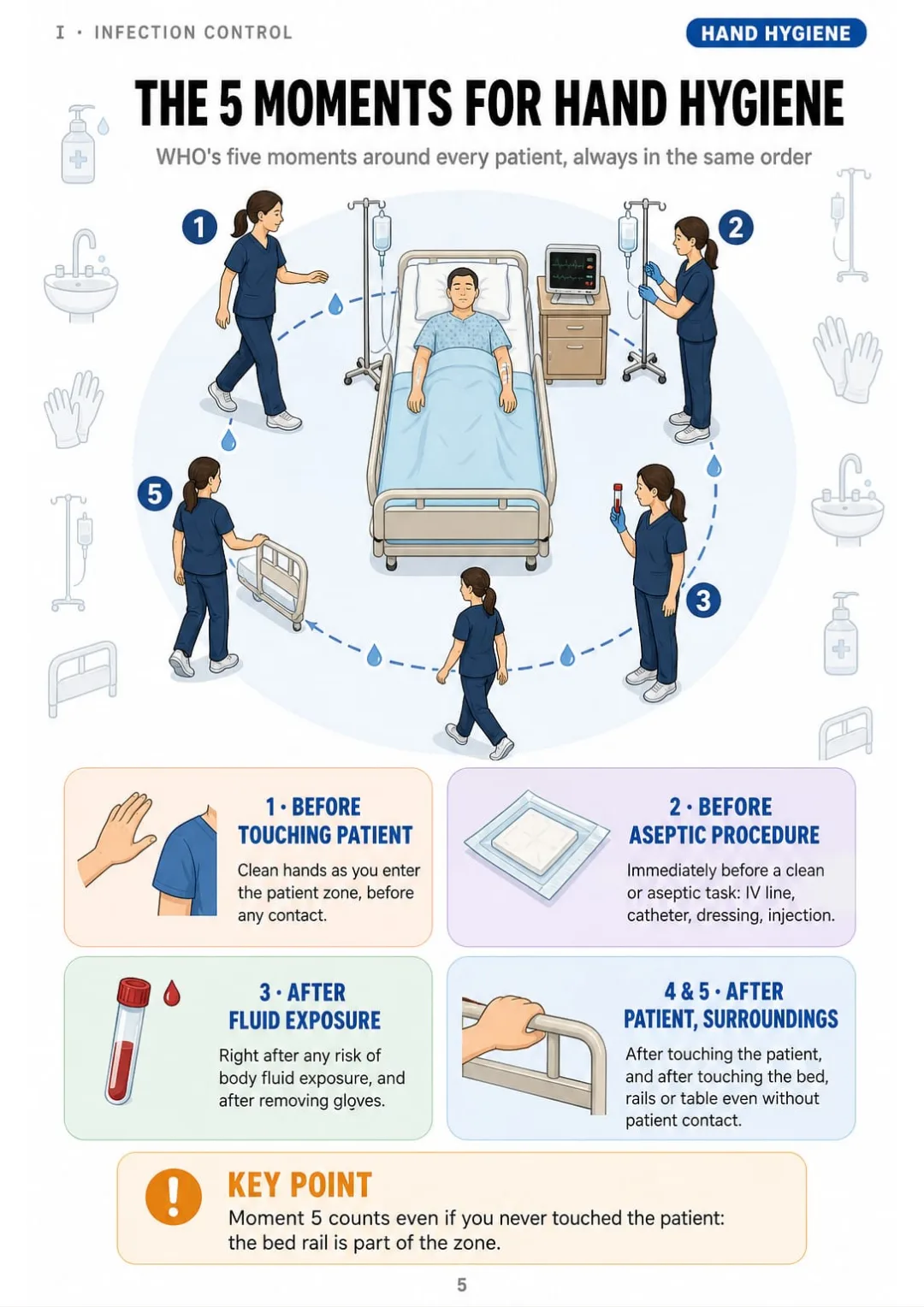
WHO's 5 Moments: before patient, before aseptic task, after fluids, after patient, after surroundings.
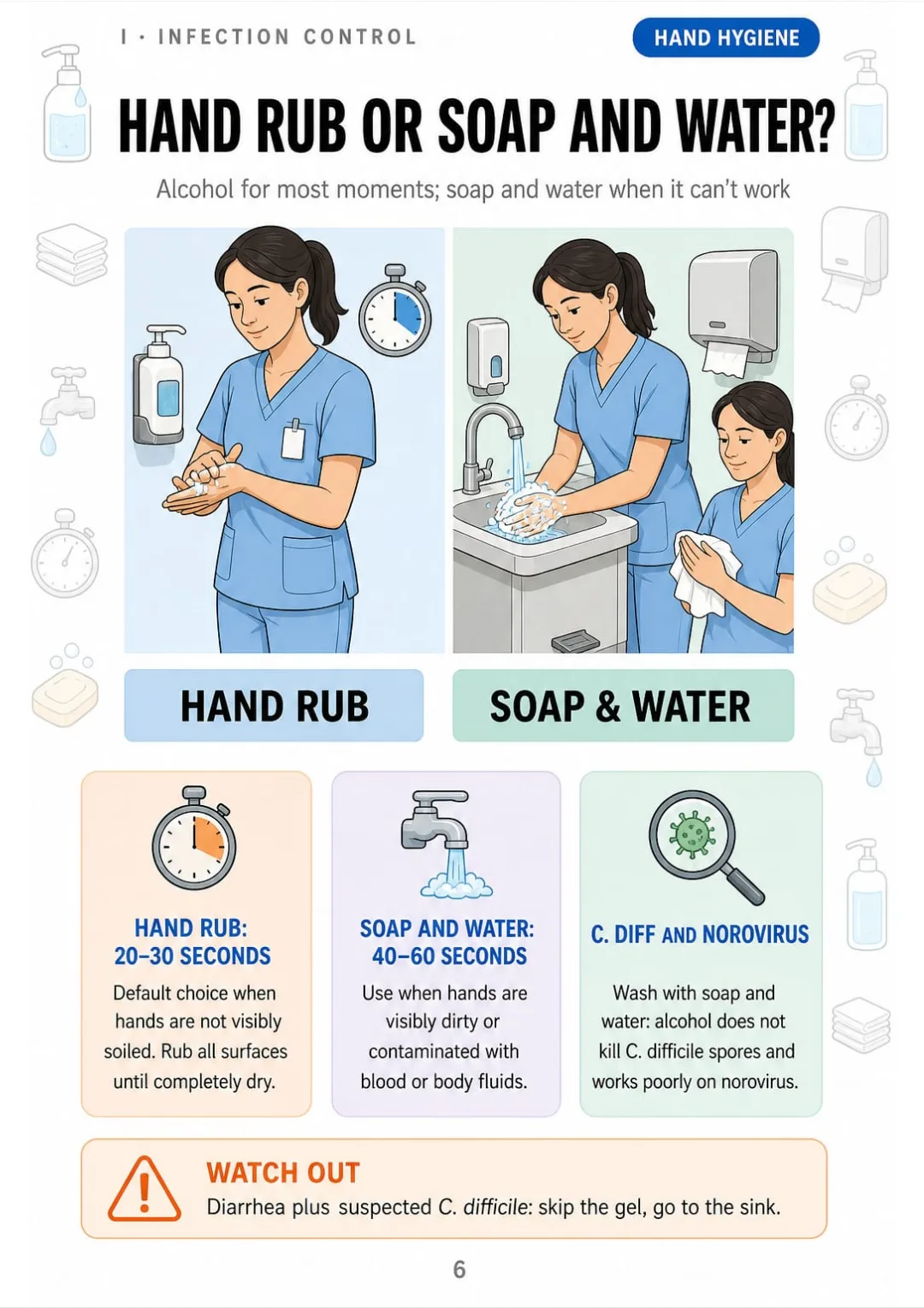
Hand rub 20–30 s; soap and water 40–60 s for soiled hands, C. difficile and norovirus.
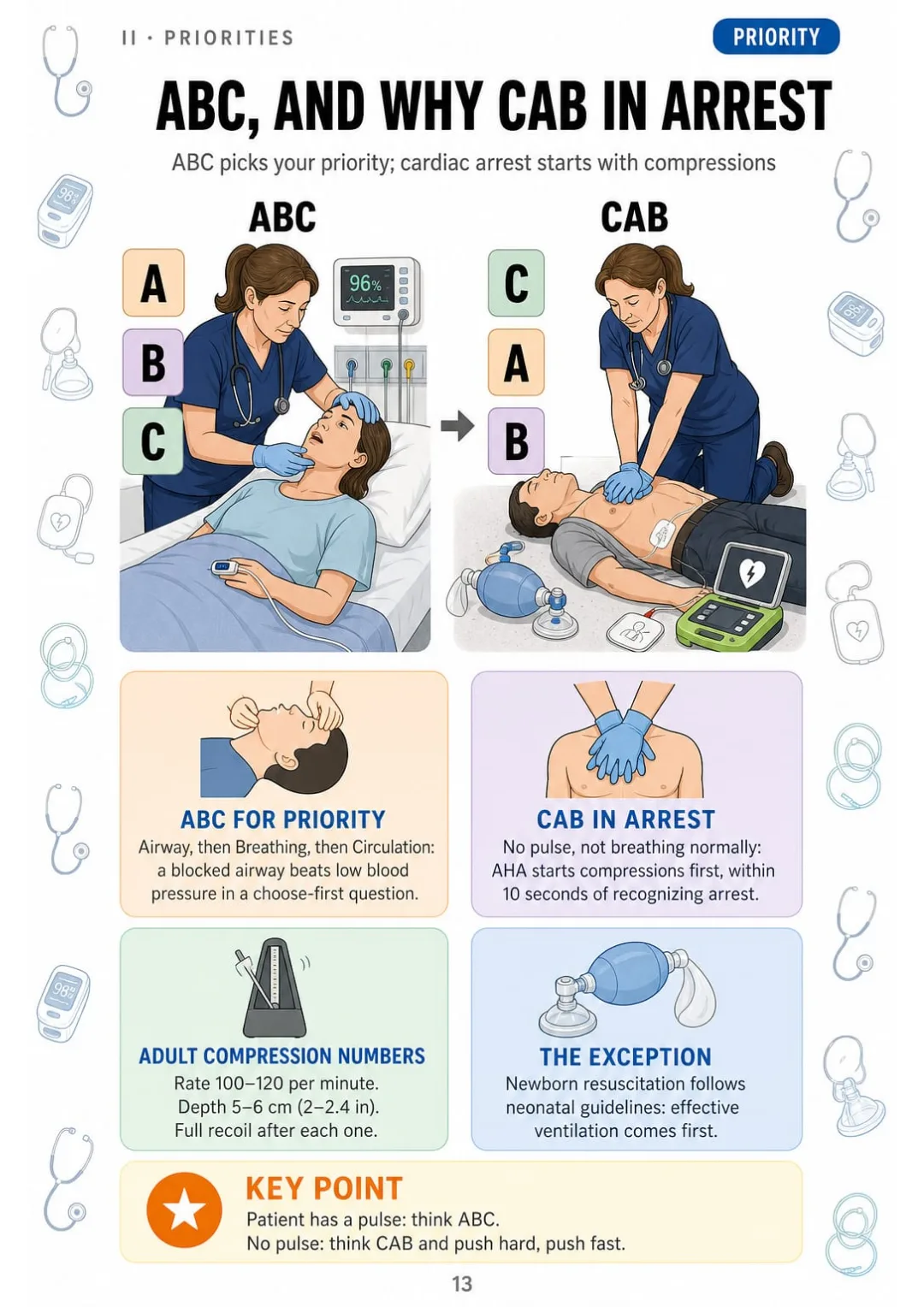
ABC for priority questions, CAB for cardiac arrest: 100–120 compressions per minute.
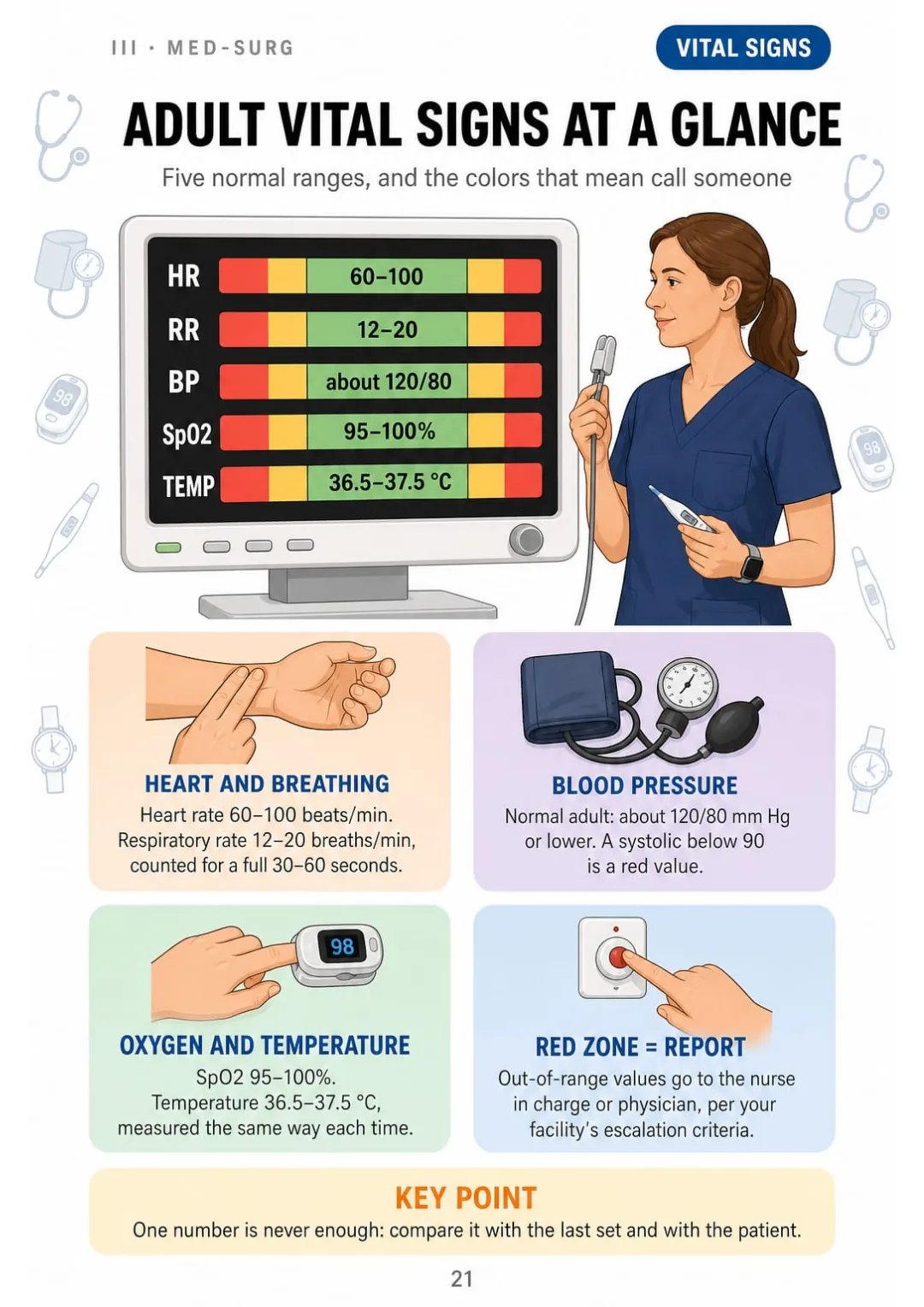
HR 60–100 · RR 12–20 · BP ~120/80 · SpO2 95–100% · 36.5–37.5 °C
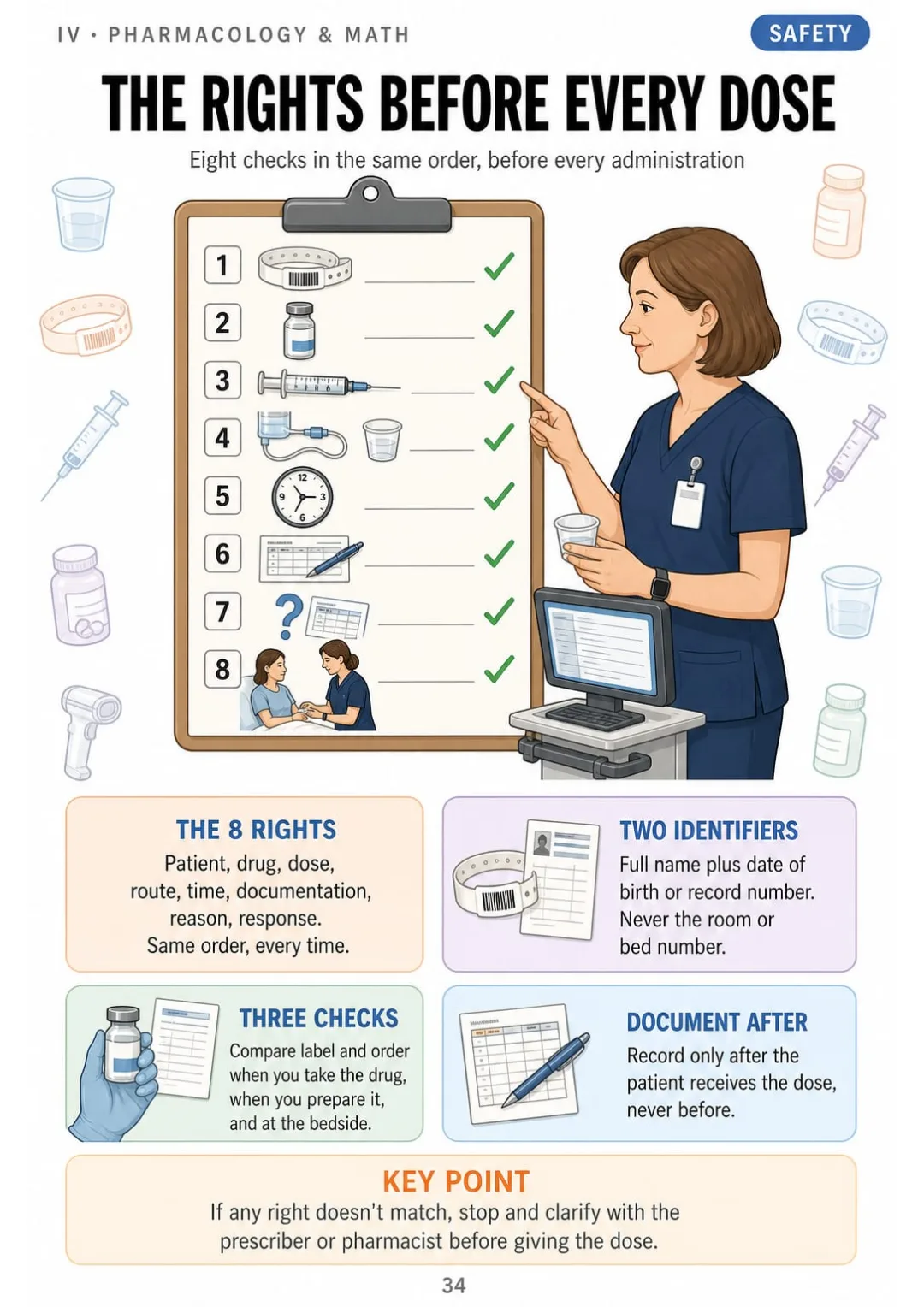
Patient, drug, dose, route, time, documentation, reason, response: one checklist.
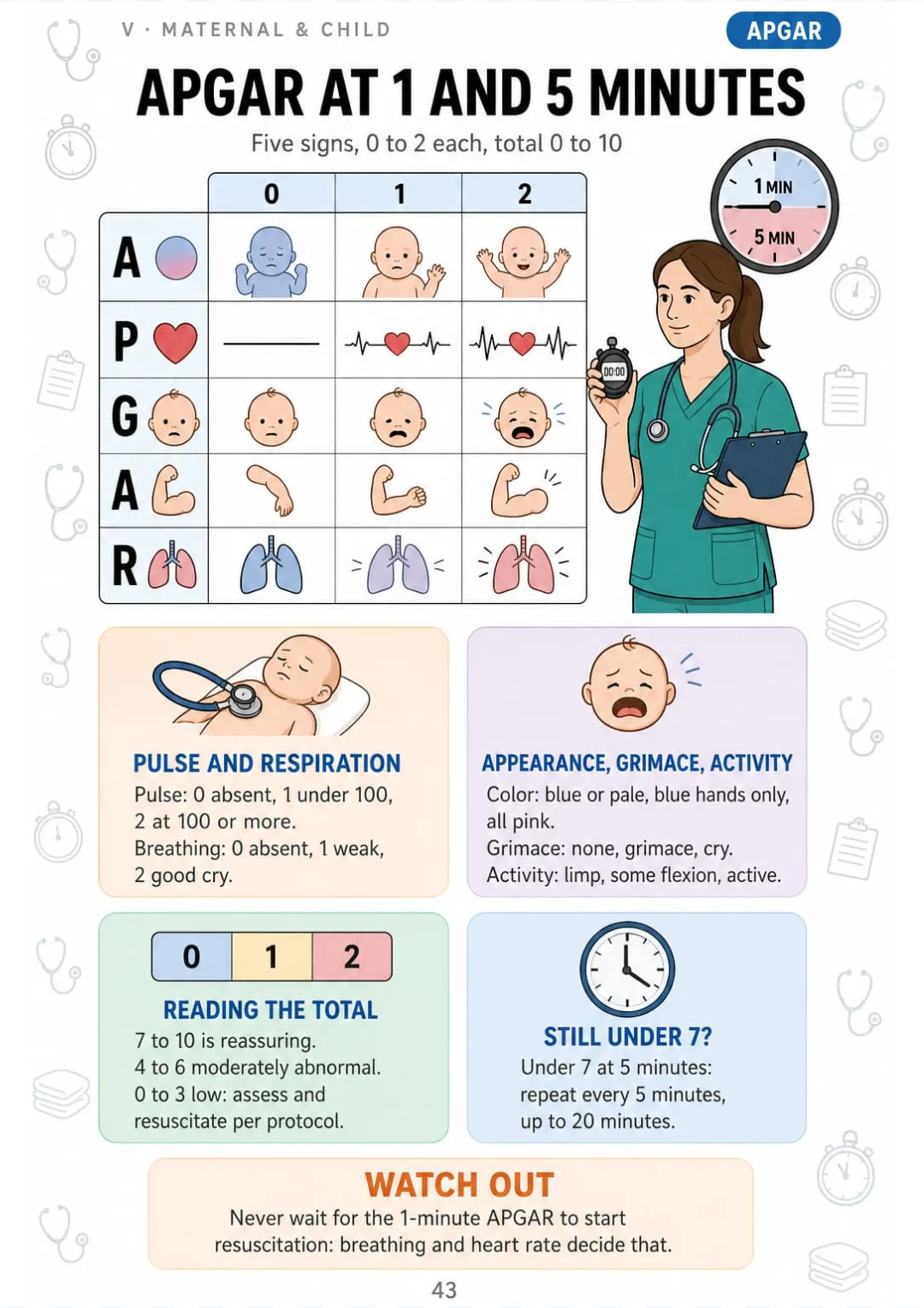
APGAR: Appearance, Pulse, Grimace, Activity, Respiration, 0 to 2 each, total 0 to 10.
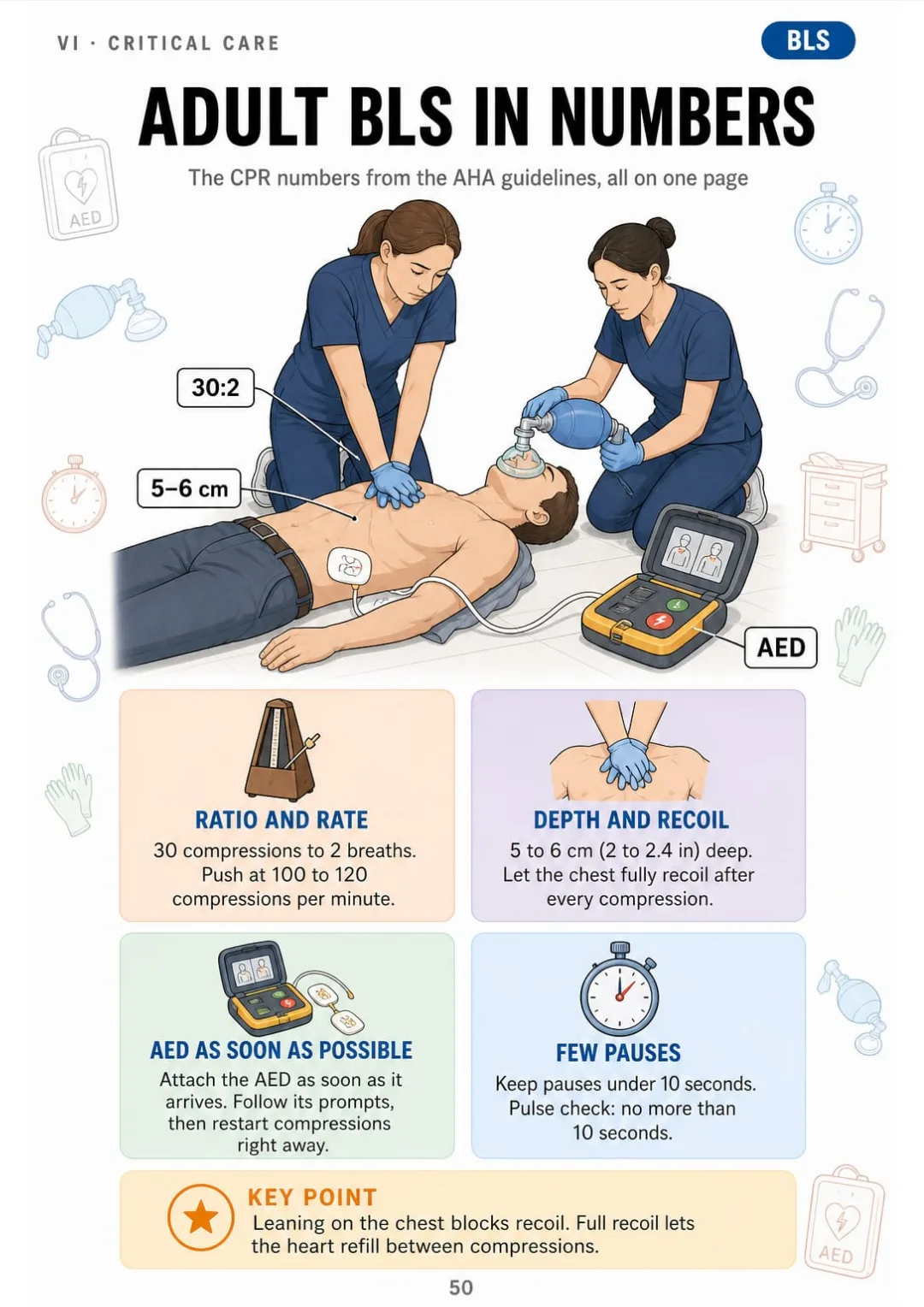
Adult BLS per AHA: 30:2, 100–120/min, 5–6 cm deep, full recoil, AED ASAP.
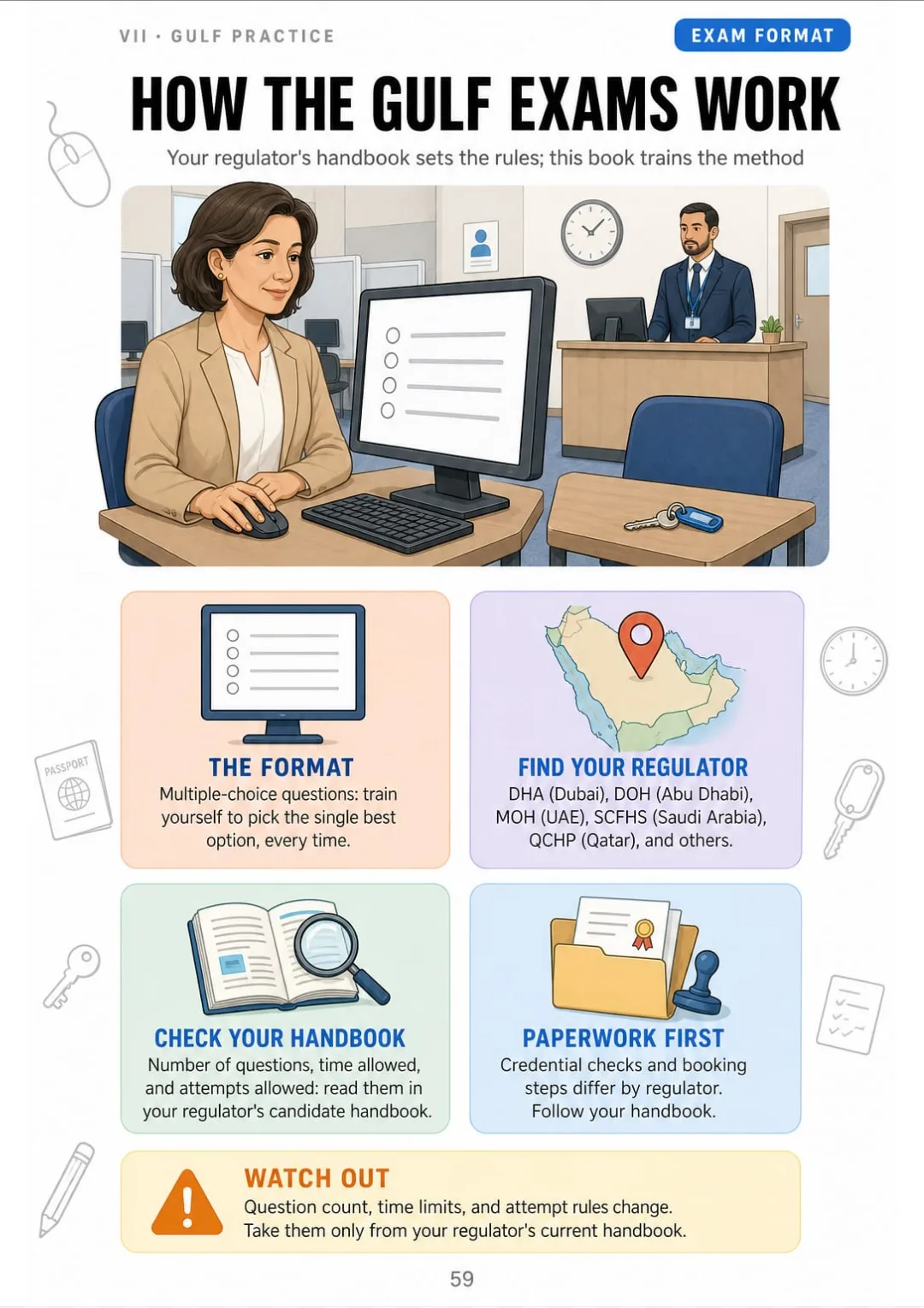
How the exam is run comes from your regulator's handbook; the method comes from this book

Swipe to see more →

These are real pages from the book. The table of contents is the full one: 7 parts and 63 topics.

It's Not Your Memory. Nobody Ever Put It in Order for You.

You've read three times when to use ABC and when to use CAB. You close your notes...

...and you no longer know which letter comes first, and why it changes in cardiac arrest. It was just one line after another.

ABC for priority questions, CAB for cardiac arrest: 100–120 compressions per minute.

Here ABC is one drawn page: airway, breathing and circulation for priority questions, and compressions first, 100 to 120 per minute, when the heart has stopped.

And on the pages next to it, every priority rule has its own: Maslow, acute before chronic, unstable before stable, the 4-step "who do you see first" method and the 5 rights of delegation.

First you understand why it's done that way. Then the order comes back on its own.

SEE THE DIFFERENCE

Stop memorizing rules you can't picture:

THIS
  • Pages and pages of dense text
  • Procedures without a single drawing
  • On the exam, you don't know where to start
Alcohol-based hand rub is the preferred method of hand antisepsis in most clinical situations when hands are not visibly soiled, and should be applied so as to cover all surfaces of the hands and fingers for approximately 20 to 30 seconds, until dry. Handwashing with soap and water for 40 to 60 seconds is indicated when hands are visibly soiled or contaminated with blood or body fluids, and following the care of patients with suspected or confirmed Clostridioides difficile or norovirus, since alcohol is not reliably effective against spore-forming organisms.
FOR THIS
  • Every concept drawn
  • One topic per page, with the rules in boxes
  • You remember it because you've seen it
Hand rub 20–30 s; soap and water 40–60 s for soiled hands, C. difficile and norovirus.
CONTENTS

Take a Look at the 7 Parts and 63 Topics

Infection control and safety, priorities and delegation, med-surg by body system, pharmacology and dosage math, maternal and child, critical care and emergencies, and Gulf practice with exam practice: 67 pages, all illustrated

IInfection Control & Safety · pp. 5-12
  1. The 5 Moments for Hand Hygiene
  2. Hand Rub or Soap and Water?
  3. PPE On: One Order
  4. PPE Off: The Other Order
  5. Contact, Droplet, Airborne
  6. Needlestick: What You Do First
  7. Two Identifiers and Fall Prevention
  8. Review: Infection Control & Safety
IIPriorities & Delegation · pp. 13-20
  1. ABC, and Why CAB in Cardiac Arrest
  2. Maslow on the Exam
  3. Acute Beats Chronic, Unstable Beats Stable
  4. Who Do You See First? A 4-Step Method
  5. ADPIE: Assess Before You Act
  6. The 5 Rights of Delegation
  7. SBAR Handover
  8. Review: Priorities & Delegation
IIIMed-Surg by Body System · pp. 21-33
  1. Adult Vital Signs at a Glance
  2. Chest Pain: Acute Coronary Syndrome
  3. Heart Failure: Left vs Right
  4. Oxygen Devices and COPD Targets
  5. Glasgow Coma Scale: 3 to 15
  6. Stroke: BE FAST and the Clock
  7. Hypoglycemia vs Hyperglycemia
  8. DKA vs HHS
  9. Kidneys: Urine Output and AKI
  10. GI Bleeding: Upper vs Lower
  11. Compartment Syndrome: The 6 Ps
  12. Pressure Injury Stages 1 to 4
  13. Review: Med-Surg
IVPharmacology & Dosage Math · pp. 34-42
  1. The Rights of Medication Administration
  2. Conversions You Must Know Cold
  3. Desired over Have, Times Volume
  4. Weight-Based Dosing as a Study Exercise
  5. IV Drip Rate in gtt/min
  6. Infusion Pump Rate in mL/h
  7. High-Alert Medications
  8. Antidotes: Drug and Its Reversal
  9. Review: Pharmacology & Math
VMaternal & Child · pp. 43-49
  1. APGAR at 1 and 5 Minutes
  2. The Stages of Labor
  3. Fetal Heart Rate and Decelerations
  4. Postpartum Hemorrhage and the Fundus
  5. Preeclampsia and Magnesium Sulfate
  6. Pediatric Vital Signs by Age
  7. Review: Maternal & Child
VICritical Care & Emergencies · pp. 50-58
  1. Adult BLS in Numbers
  2. Shockable or Not?
  3. Reading an ECG Strip in 5 Steps
  4. Blood Gases with ROME in 4 Steps
  5. Four Types of Shock
  6. Sepsis: Recognize and Escalate
  7. Anaphylaxis: What Comes First
  8. Burns: The Rule of Nines
  9. Review: Critical Care
VIIGulf Practice & Exam Practice · pp. 59-67
  1. How the Gulf Licensing Exams Work
  2. Consent, Privacy and Interpreters
  3. Culturally Safe Care in the Gulf
  4. Reading the Question: First, Best, Except
  5. Common Mistakes on Exam Questions
  6. Practice Set 1: Safety and Priorities
  7. Practice Set 2: Med-Surg and Math
  8. Practice Set 3: Maternal-Child and Critical Care
  9. Your Last 2 Weeks: Review Checklist

What If Every Topic Fit on a Single Page?

What if every topic fit on a single page?

Instead of rereading half a page on the Glasgow Coma Scale without being able to picture it...

...you open the page and find eyes, verbal and motor drawn side by side, each score with what you see at the bedside, from 3 to 15 in one table.

Patient, drug, dose, route, time, documentation, reason, response: one checklist.

And hand hygiene, PPE, blood gases, drip rates and BLS turn into drawings and tables you can read at a glance.

You stop rereading and start understanding.

That's Gulf Nursing Exam, Illustrated: 67 illustrated pages in 7 parts, one topic per page, and at the end 3 practice sets of exam-style questions with answers, explanations and the page to go back to.

Because what your brain sees organized, it remembers.

Here Is What You Get with Gulf Nursing Exam, Illustrated:

Ipp. 5-12

Infection Control & Safety

The WHO's 5 Moments, hand rub or soap and water, donning and doffing PPE, contact, droplet and airborne precautions, needlesticks, two patient identifiers and fall prevention.

IIpp. 13-20

Priorities & Delegation

ABC and CAB, Maslow, acute vs chronic, the 4-step "who do you see first" method, ADPIE, the 5 rights of delegation and SBAR handover.

IIIpp. 21-33

Med-Surg by Body System

Adult vital signs, chest pain, heart failure, oxygen and COPD, Glasgow, stroke, glucose, DKA vs HHS, kidneys, GI bleeding, the 6 Ps and pressure injuries.

IVpp. 34-42

Pharmacology & Dosage Math

The rights of medication administration, conversions, desired over have, weight-based dosing as a study exercise, drip and pump rates, high-alert drugs and antidotes.

Vpp. 43-49

Maternal & Child

APGAR, the stages of labor, fetal heart rate and decelerations, postpartum hemorrhage, preeclampsia and magnesium sulfate monitoring, and pediatric vital signs.

VIpp. 50-58

Critical Care & Emergencies

Adult BLS, shockable rhythms, ECG strips in 5 steps, blood gases with ROME in 4 steps, shock, sepsis, anaphylaxis and the rule of nines.

VIIpp. 59-67

Gulf Practice & Exam Practice

How the exams work, consent and interpreters, culturally safe care, reading the question, common mistakes, 3 practice sets and a last-2-weeks checklist.

At the end of the book: 3 practice sets of exam-style questions with explanations and a last-2-weeks review checklist.
And That Is Not All: 2 More Books, Free

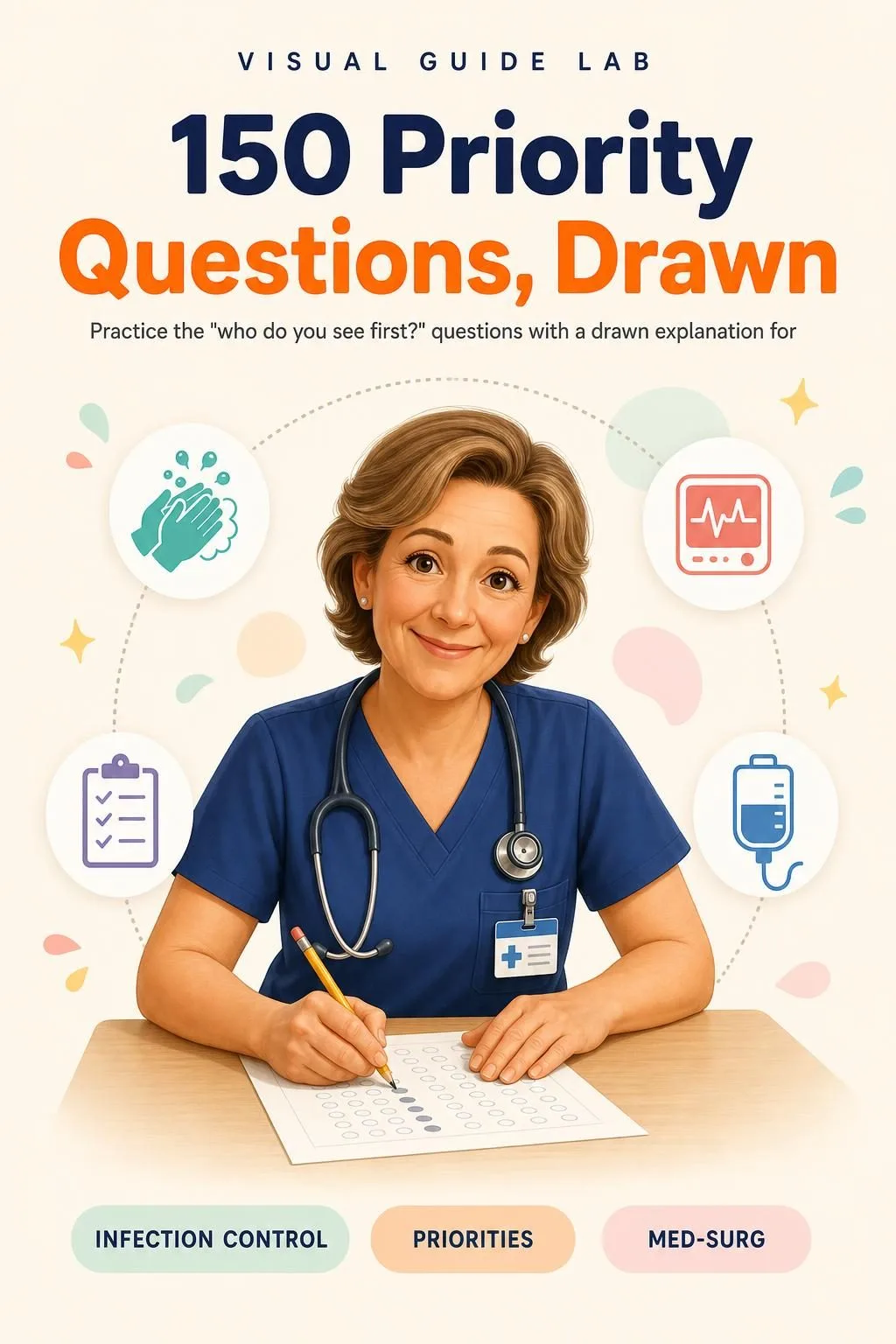
150 Priority Questions, Drawn

BONUS 1: «150 Priority Questions, Drawn»

Value on its own: US$ 17.90

Practice the "who do you see first?" questions with a drawn explanation for every answer, so you learn the order behind the choice, not just the letter.

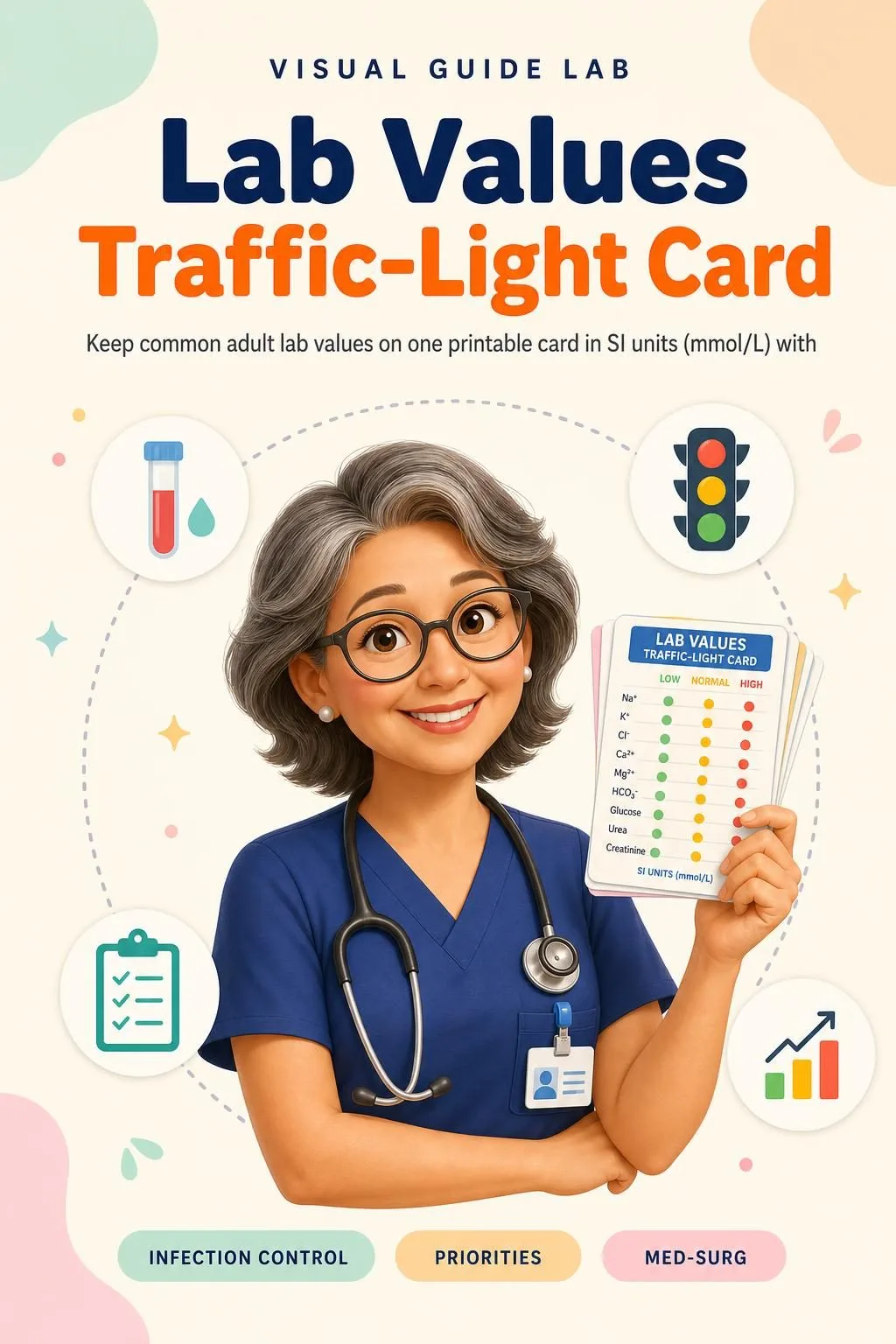
Lab Values Traffic-Light Card

BONUS 2: «Lab Values Traffic-Light Card»

Value on its own: US$ 14.90

Keep common adult lab values on one printable card in SI units (mmol/L) with conventional units in brackets, sorted green, yellow and red. Approximate ranges: check local reference ranges.

Gulf Nursing Exam, Illustrated + 2 Free Books

  • Gulf Nursing Exam, Illustrated: 67 illustrated pagesUS$ 63
  • BONUS 1: 150 Priority Questions, DrawnUS$ 17.90
  • BONUS 2: Lab Values Traffic-Light CardUS$ 14.90
  • High-resolution PDF to printIncluded
Total value US$ 95.80
YOUR PRICE:
US$ 27
You save US$ 68.80
YES, I WANT GULF NURSING EXAM, ILLUSTRATED FOR US$ 27

📄 This is a digital PDF book sent to your email: nothing is printed or shipped.

Secure purchaseEncrypted payment30-day guarantee

PDF by email: Gulf Nursing Exam, Illustrated reaches your inbox as a PDF, and the two free books come by email too. One-time payment, no installments or hidden costs.

Is This Book for You?

You're starting your review

You're starting your review

Infection control, priorities, med-surg and pharmacology, one topic per page, to go through between shifts on your phone.

Your exam date is booked

Your exam date is booked

The whole review in 7 parts, and at the end 3 practice sets of exam-style questions with the explanation and the page to go back to.

You've been on the floor for years

You've been on the floor for years

You know the work. This puts it in textbook order and in the words the questions use: priorities, Glasgow and BLS per AHA guidelines.

To Sum Up: Here Is What You Get

US$ 95.80US$ 27
YES, I WANT GULF NURSING EXAM, ILLUSTRATED FOR US$ 27

📄 This is a digital PDF book sent to your email: nothing is printed or shipped.

30DAYS
GUARANTEE

30-Day Guarantee

30-day guarantee: tell us what didn't work and we'll refund 100%.

You have 30 days to try Gulf Nursing Exam, Illustrated and the two bonus books. If it doesn't work for you, tell us what didn't work and we'll refund 100% of what you paid. One-time payment, no subscription.

Frequently Asked Questions

How do I receive it?

You receive Gulf Nursing Exam, Illustrated as a high-resolution PDF by email, at the address you enter at checkout, to read on your phone or print. The two bonus books, 150 Priority Questions, Drawn and Lab Values Traffic-Light Card, also come by email.

Is it a monthly or one-time payment?

A one-time payment of $27. No installments, no subscription.

Who is it for?

For registered nurses with clinical experience preparing for a Gulf nursing licensing exam (DHA, DOH, MOH, SCFHS, QCHP and others). It's not an NCLEX book: it covers core nursing topics in °C and metric/SI units first, with a part on how to read exam questions. It doesn't teach nursing from scratch: it puts what you already do in exam order. Check the table of contents above.

What sources is it based on?

WHO guidance on hand hygiene, patient safety and postpartum hemorrhage; CDC Standard and Transmission-Based Precautions and PPE sequence; the AHA Guidelines for CPR and ECC; and standard med-surg nursing textbooks. Lab and vital sign ranges are approximate: check local reference ranges. For the exam format, always check your regulator's candidate handbook.

Is it official material?

No. It's independent study material. Not affiliated with Prometric or any health regulator, and not endorsed by them. It contains no copies of any exam, and it doesn't give a certificate or CE/CPD hours.

Does it replace a course or my training?

No. It's a study companion. It doesn't replace your nursing education, clinical training, your facility's protocols or prescriber orders. Every medication page says: follow local protocol and prescriber orders.

Are the practice questions the ones on the exam?

No. They're written for this book, to practice the method. They aren't official exam questions. Keep using your question bank: this book is where you go back to understand why an answer is right, with the page to reread.

Can I print it?

Yes. It's a high-resolution PDF: read it on your phone or print the pages you want to keep at hand.

What if I don't like it?

You have 30 days. Tell us what didn't work and we'll refund 100%.

One Last Thing Before You Decide...

You don't have to reread the same page hoping it sticks this time.

You don't have to memorize priority rules you can't picture.

And you definitely don't have to walk into the exam without knowing where to start.

One last thing before you decide: you already know the work. This puts it in order, one topic per page, with the drawing next to it. PDF by email, to read on your phone or print.

One-time payment: US$ 27 · Guarantee: 30 days · PDF by email

YES, I WANT GULF NURSING EXAM, ILLUSTRATED FOR US$ 27

📄 This is a digital PDF book sent to your email: nothing is printed or shipped.